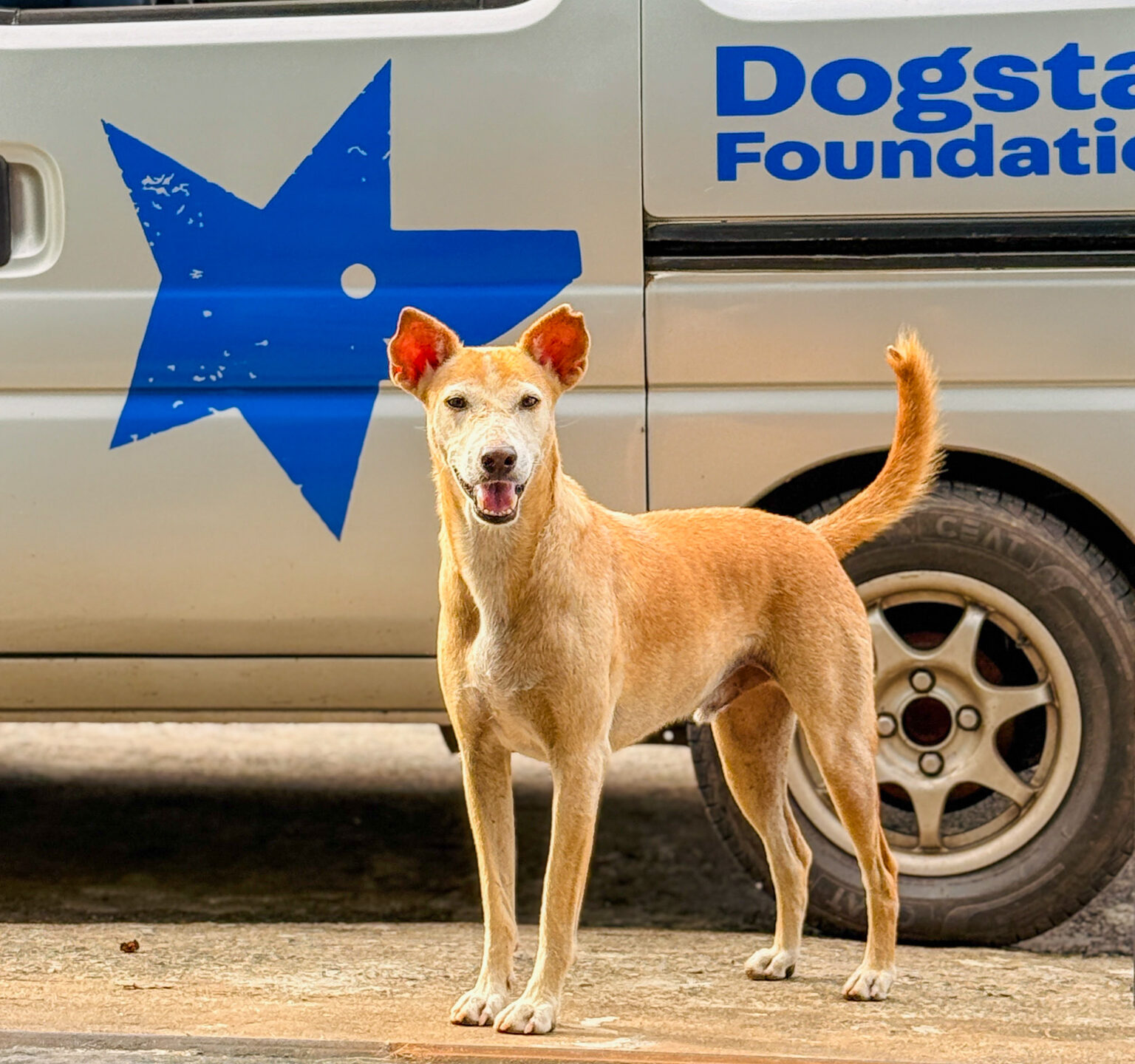
A sandy coloured street dog standing in front of a Dogstar Foundation van.

What to do if you see a stray dog in Sri Lanka

Street dogs are very much a part of daily life here in Sri Lanka, and even owned dogs are often free-roaming.

We understand that for many visitors, seeing a lone dog on the street can be worrying at first glance. But many street dogs are watched over by the communities around them and, with a little support, can live happy, healthy lives right where they are.

With this in mind, we’ve created this guide to explain more about Sri Lanka’s street dog population and the small ways you can lend a helping paw to dogs in need.


Why are there so many street dogs in Sri Lanka?

A roaming lifestyle is normal for many dogs in Sri Lanka, and seeing a dog out on the street doesn’t necessarily mean they don’t have a home. Many houses don’t have secure walls or fences, so owned dogs are often free to come and go – much like a cat might be in the UK.

Others may be community dogs looked after by local people, while some will be true strays.

One reason the population of street dogs is so high is that, since 2006, Sri Lanka has followed a ‘no‑kill’ approach and instead uses something called catch‑neuter‑vaccinate‑return (CNVR).

It’s a far kinder approach, with dogs sterilised, vaccinated and safely returned to the places they know as home. It’s also highly effective, but it needs to be carried out widely and consistently, and it takes time to reduce street dog numbers.


What’s the difference between stray dogs and community dogs?

A stray dog is not linked to a household. They may have been abandoned or born on the streets.

A community dog doesn’t have a single owner, but is often fed and looked out for by local people. Removing them can actually disrupt a neighbourhood’s balance. 


What to do if you see a street dog in Sri Lanka

The most sensible thing you can do is pause and assess the situation carefully.

Keep a safe distance

As much as you might want to say hello, it’s best to keep a distance (especially if you haven’t been vaccinated against rabies). Rabies is present in Sri Lanka and can be spread to humans through bites, scratches or even licks on broken skin. Avoid touching, particularly if the dog is eating, guarding pups or looks frightened. If you are bitten or scratched, wash the wound with soap and running water for at least 15 minutes and get medical care right away for rabies post‑exposure treatment (you can read more about this in our dedicated blog).

Support long-term solutions

One of the best ways you can help street dogs in Sri Lanka is by supporting an organisation like Dogstar.

Every donation helps provide everything from daily meals and vaccinations to parasite treatment, veterinary care and spay/neuter surgery, helping street dogs stay happy and healthy where they are.


Can you feed stray dogs safely?

Feeding is a great way of showing your love for local dogs, but ad‑hoc feeding can pull groups of dogs into busy areas and cause friction.

It’s also not a good idea to create a situation where you become a dog’s sole food source unless you can provide that support consistently. Otherwise, a dog may come to rely on you and struggle when you leave.

Donating to an established feeding programme (like the one Dogstar runs!) is the ideal way to support street dog feeding in a safe, sustainable way.


Can I take a stray dog home to the UK from Sri Lanka?

It’s possible, but complex, and it’s not something we can support.

To bring a dog into Great Britain from Sri Lanka, you’ll need to meet a number of requirements. These include microchipping, rabies vaccination and a rabies blood test, followed by a three-month wait before travel. You’ll also need the correct paperwork, tapeworm treatment and an approved travel route.

Additional rules apply if you’re bringing a dog to Great Britain for rehoming, so always check the latest GOV.UK guidance before making any plans.

You’ll also need to meet Sri Lanka’s export requirements through the Department of Animal Production & Health.

Rather than relocating street dogs overseas, Dogstar’s work focuses on helping them live happy, healthy lives where they are through spay/neuter, vaccination, feeding and veterinary care. Read more about our approach here.


How you can support street dogs in Sri Lanka through Dogstar

Our feeding team hit the streets every single day, delivering delicious meals far and wide to street dogs and cats. They do it all in the Dogstar tuk-tuk, affectionately named the Meals on Three Wheels service!

But every meal is about more than filling hungry tummies. It’s often the first step towards an animal receiving life-changing spay/neuter surgery, vaccinations and veterinary treatment.

By supporting Dogstar, you’re helping make that journey possible.